The Great Swamp
The Great Swamp is a remarkable habitat nestled within the Piedmont phsyiographic province and is one of NJ’s largest swamps largely due to NJ’s unique glacial past. The Great Swamp is a remnant of the expansive Glacial Lake Passaic which at it’s greatest expanse is thought to have extended 30 miles long by 10 miles wide and 300 feet deep across northern NJ some 15,000 to 11,000 years ago.
The lake formed at the End of the last Ice Age as the Wisconsin Glacier retreated north and began to form the natural feature. The Wisconsin Glacier’s Hackensack node piled an enormous moraine into the old lake outlet in the Short Hills Gap and northern Blue Brook Valley, which created a permanent dam that would remain after the ice began retreating. With no more outlet to the sea, Glacial Lake Passaic swelled to its greatest size until it formed a new outlet known as Moggy Hollow in the southwestern Watchung Mountains. Glacial Lake Passaic was so massive at this point that it spanned north from the Preakness Mountain in Wayne and south to the Second Watchung Mountain in Liberty Corner, meanwhile, the peaks of the Third Watchung Mountain created a winding chain of islands.
Because of this singular geology and resulting unique flora and fauna much of the Great Swamp has been turned into a National Wildlife Refuge and it is important to give attention to where access is prohibited so you do not cause any ecological harm. If you do wish to sample these sensitive areas you must contact the Great Swamp Wildlife Refuge office to get special permission and permits to do so.

The Great Swamp in Early Spring
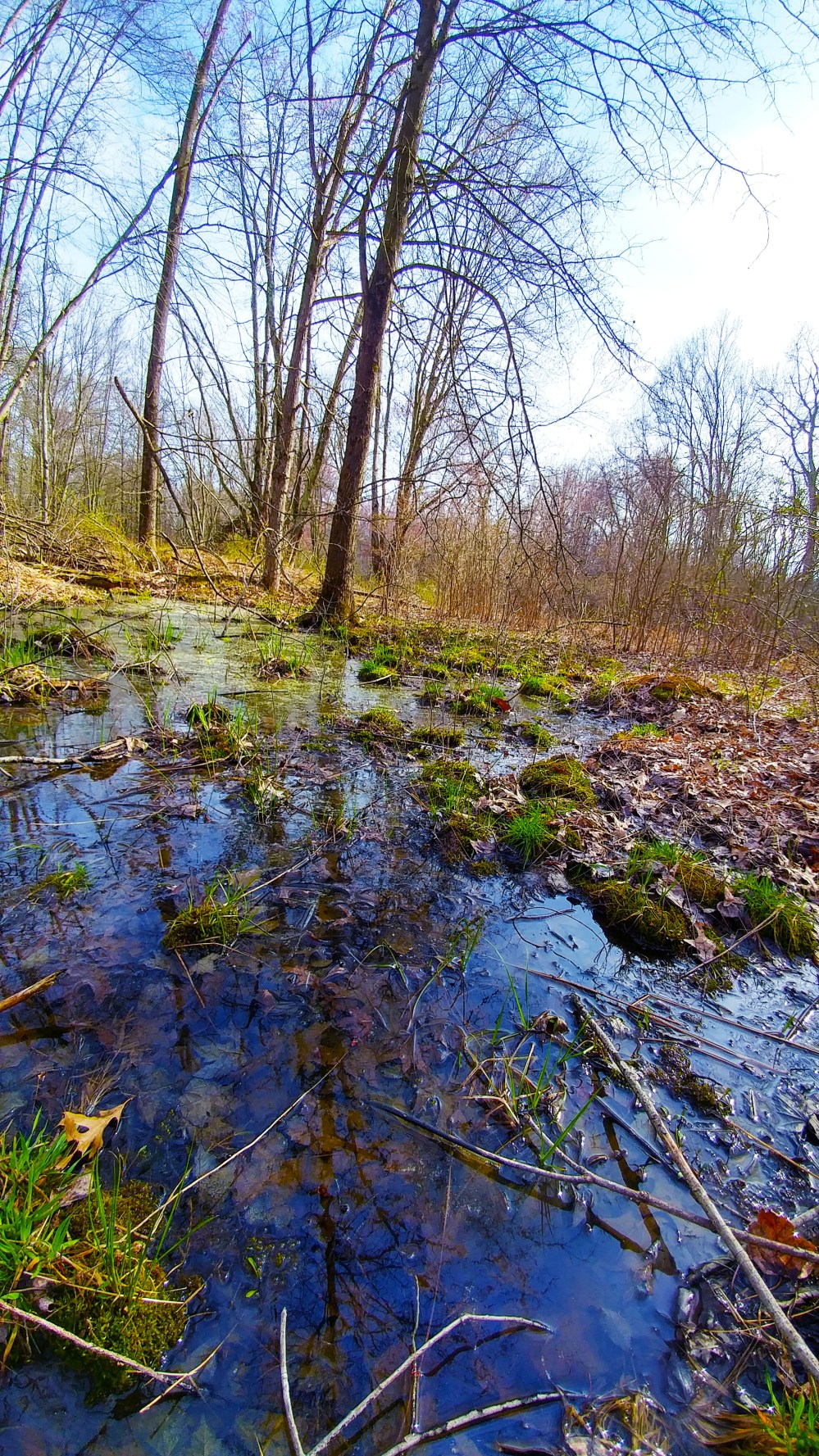
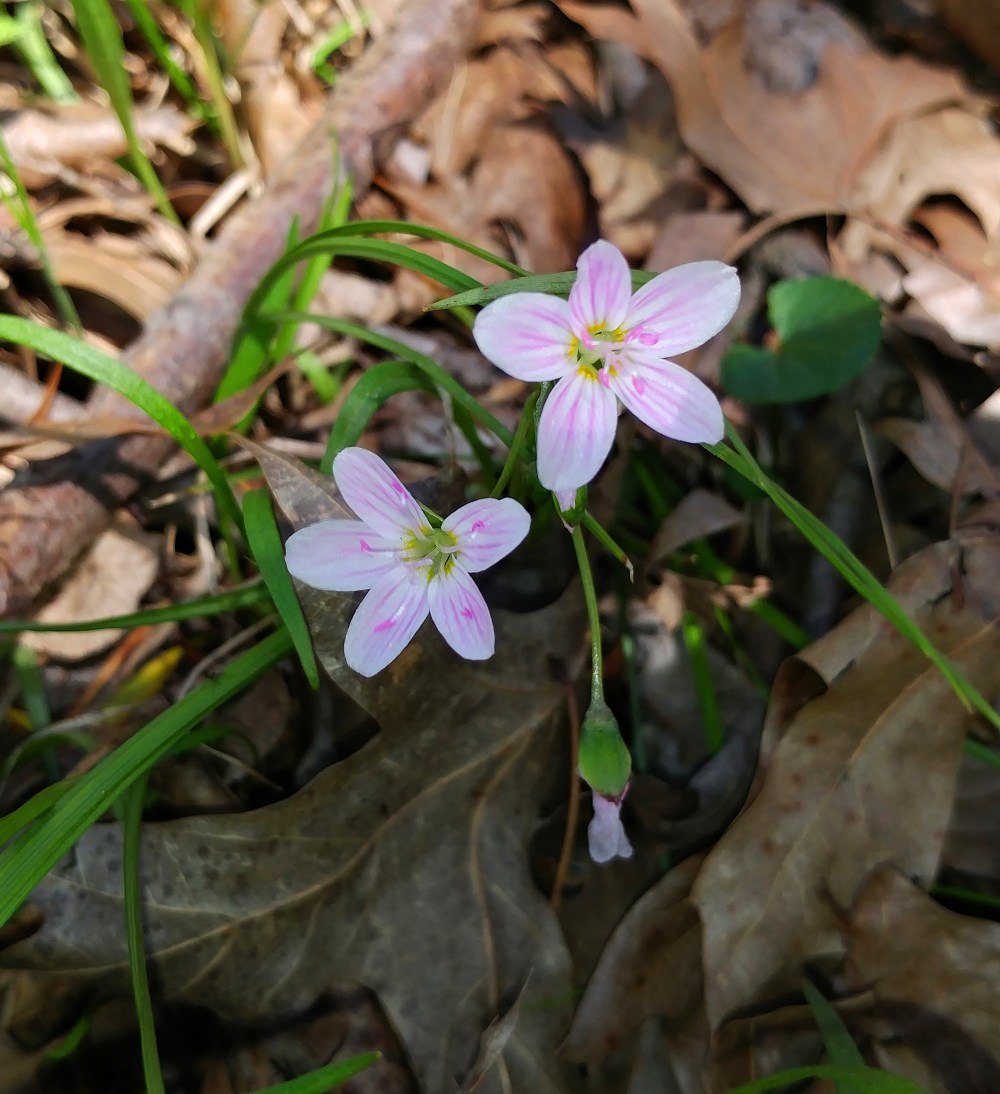
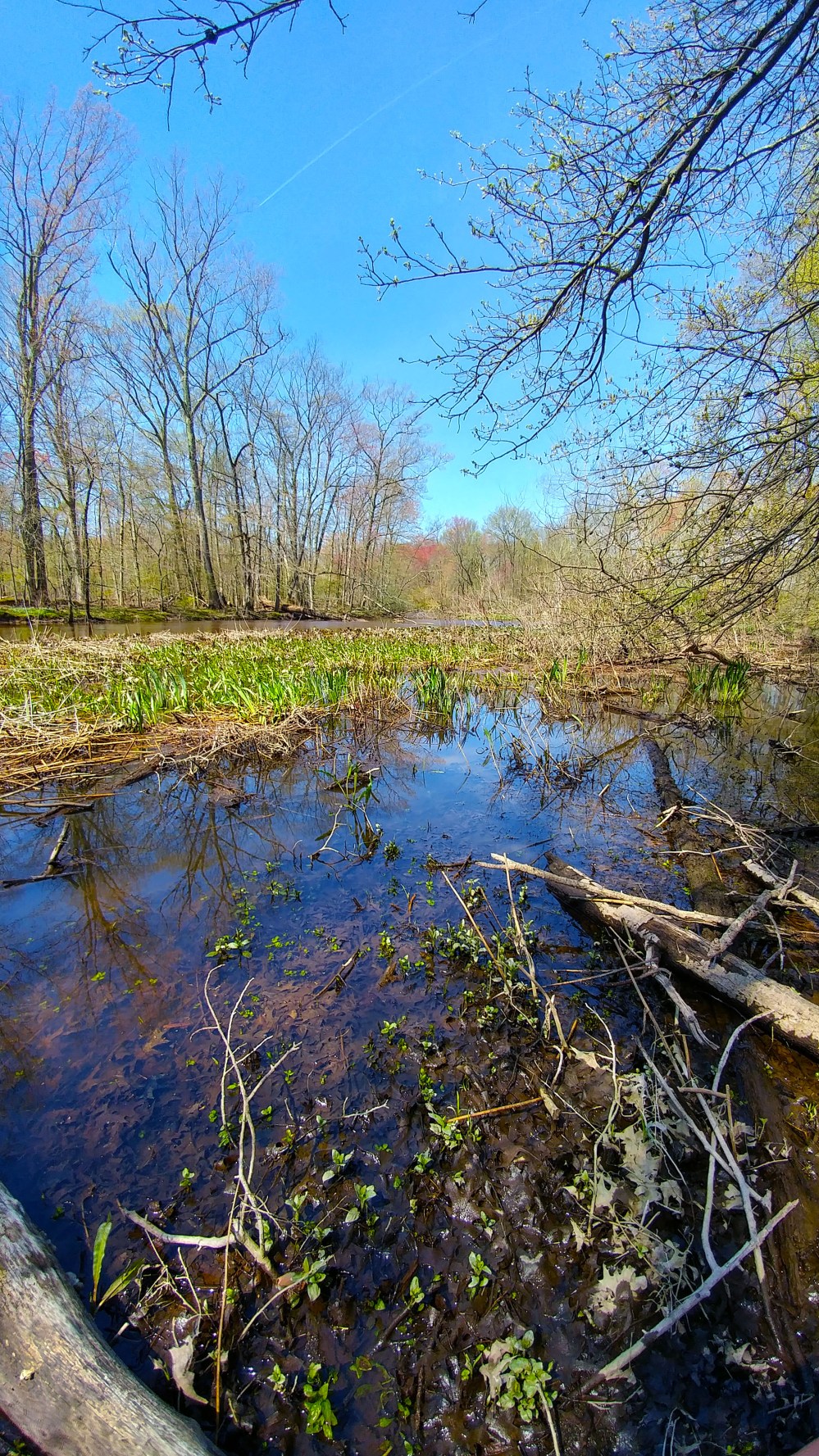
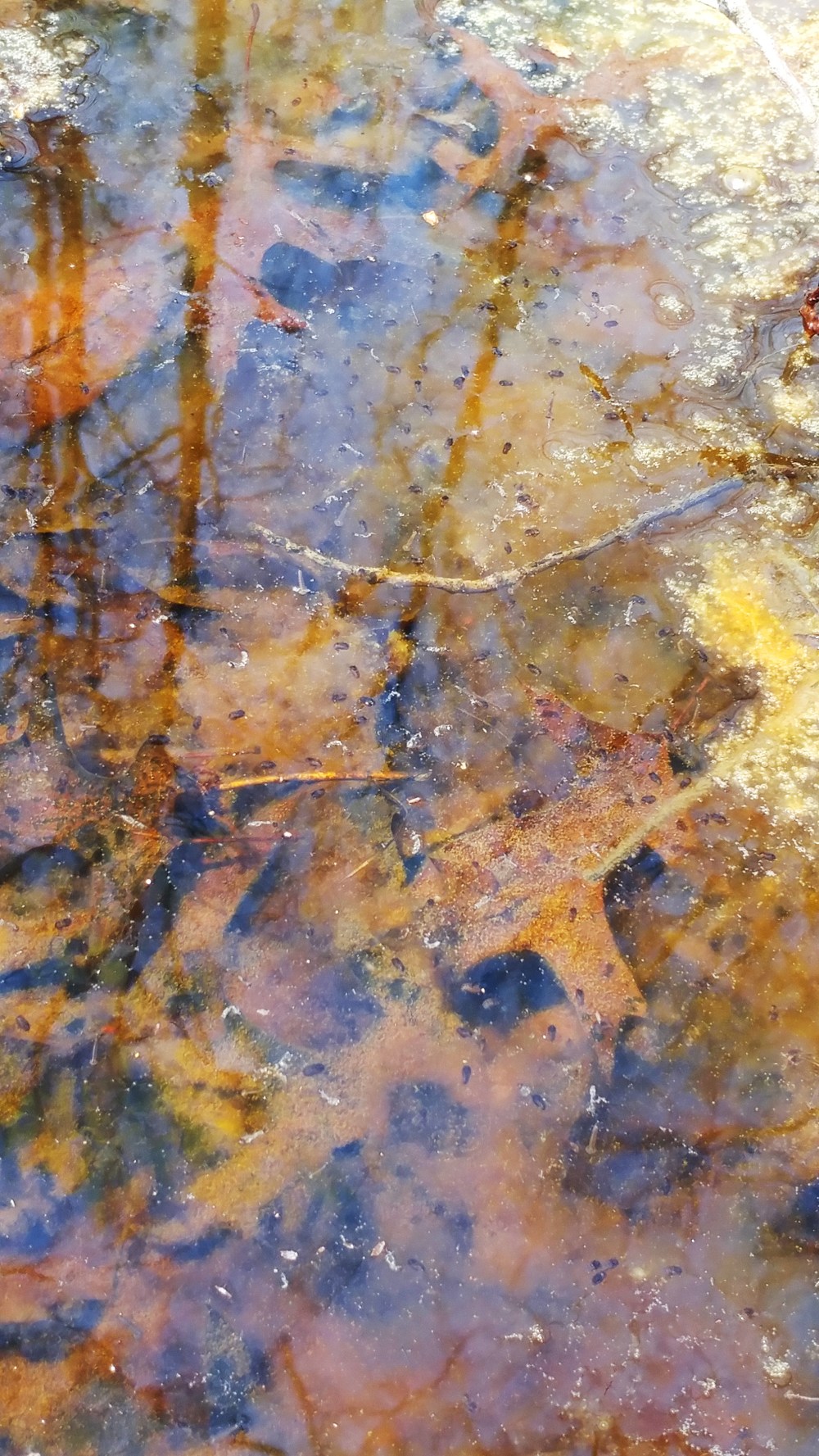
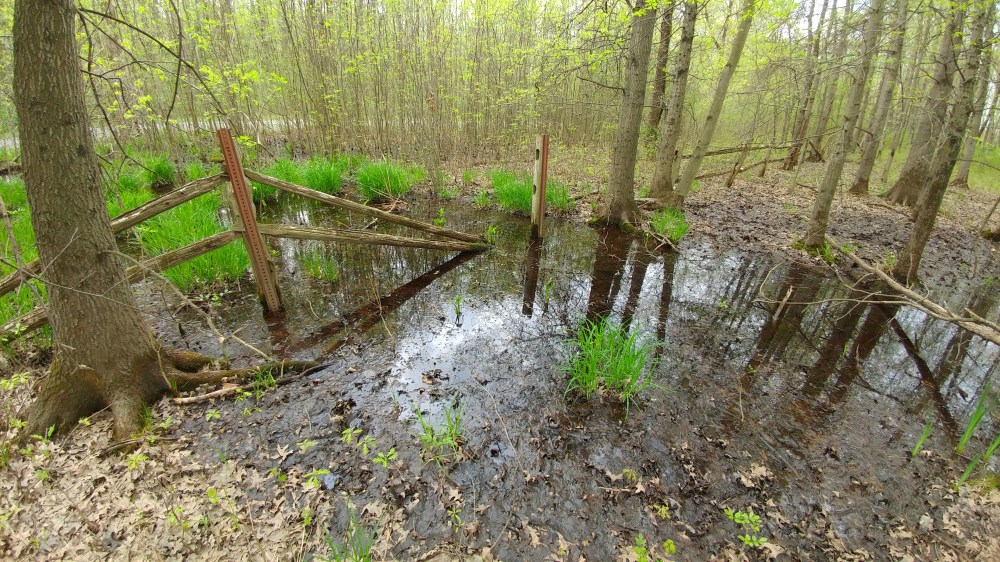
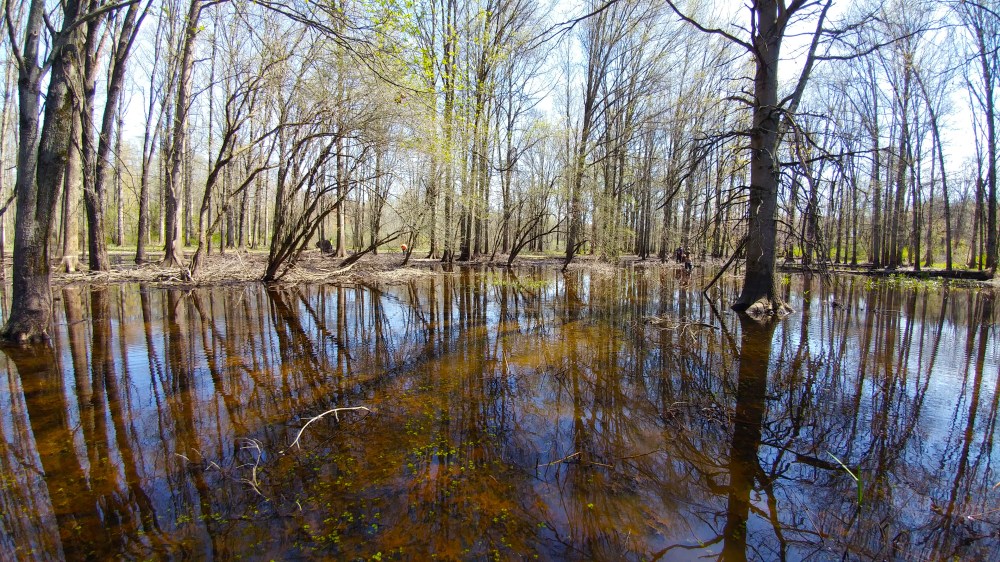
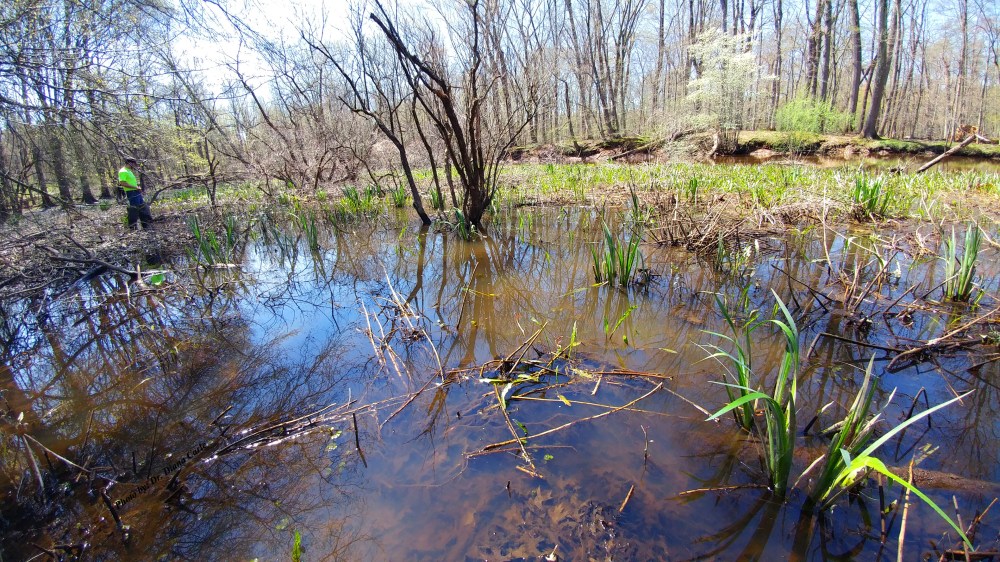
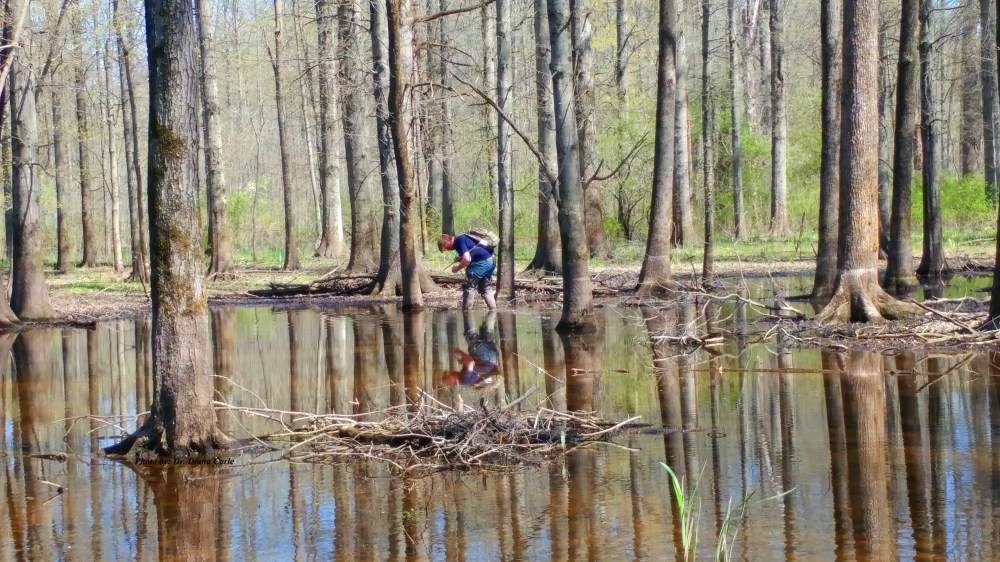
The early spring swamp habitat is typified by mostly bare trees with some small leaves starting to bud, and mostly yellow-green toned greenery that has only begun to photosynthesize, unlike the richer truer greens of summer. The waters are still quite cool and provide a prime habitat for many of the univoltine Aedes, like Ae. canadensis, Ae. cinerius, Ae. sticticus, and Ae. aurifer.
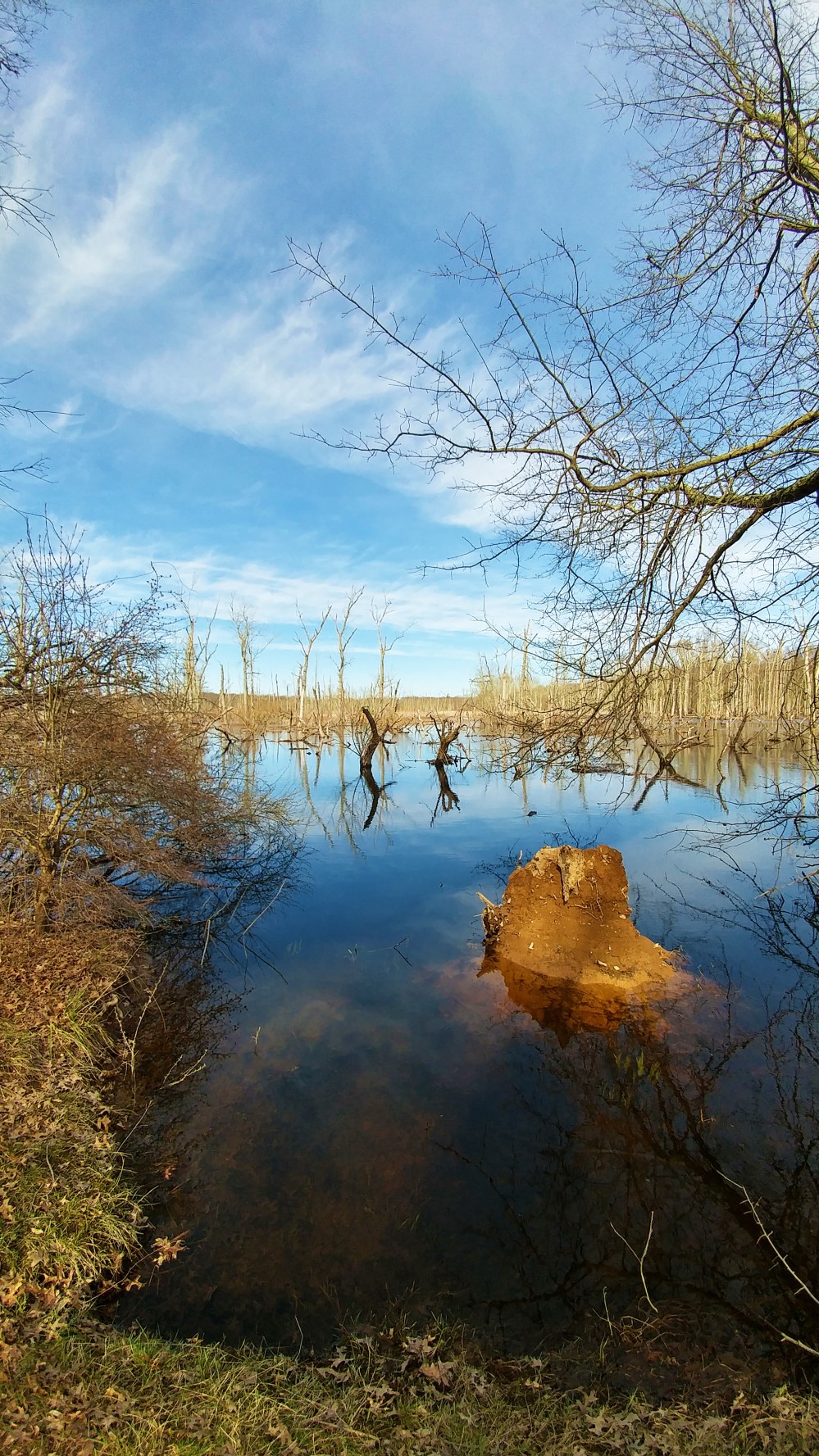
- The Passaic River that feeds the Great Swamp. Photo Credit: Dr. Diana Carle

-
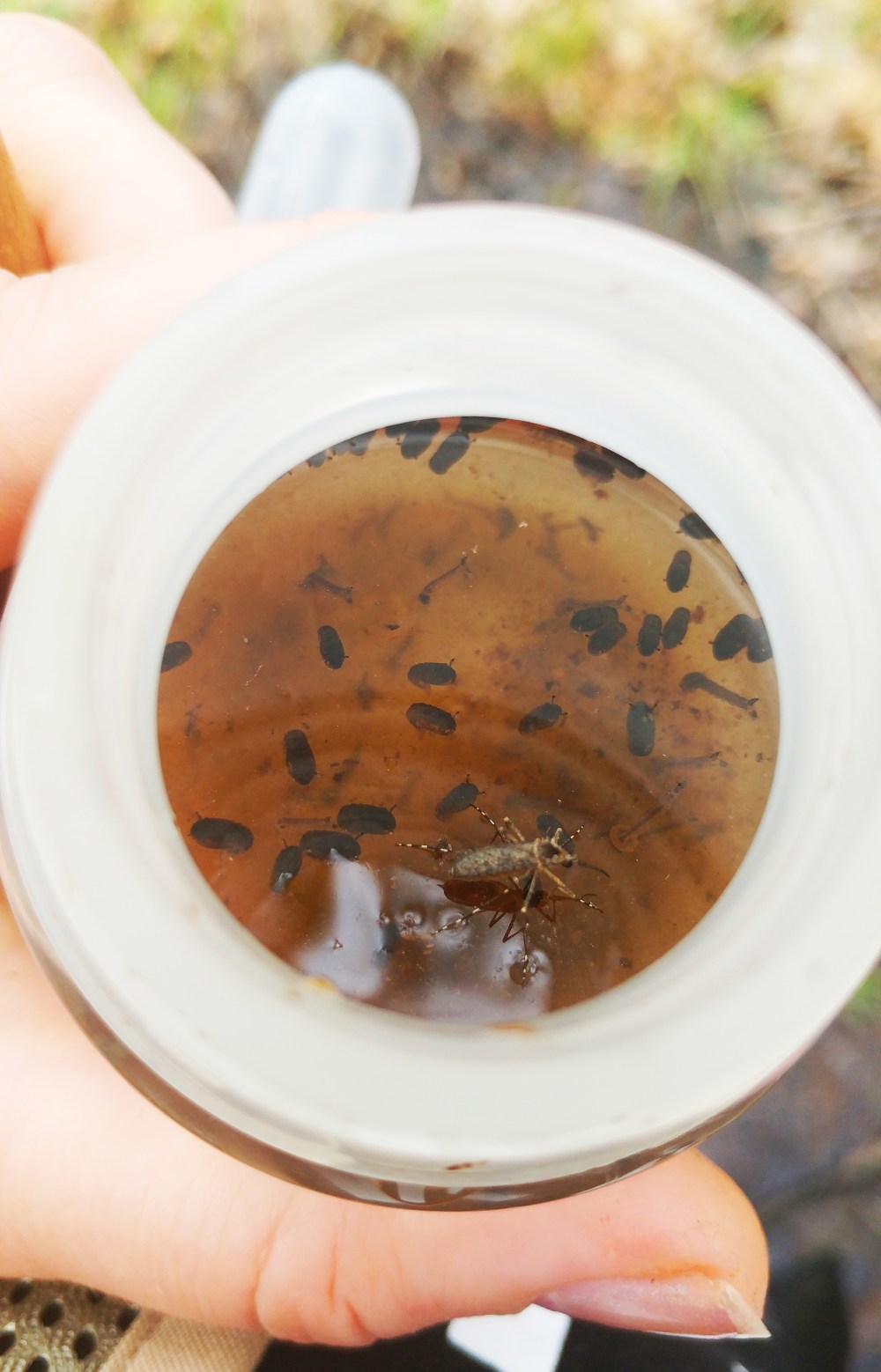
In early April the Ae. canadensis and Ae. sticticus are so primed to emerge that while sample larvae and pupae, some of the pupae will actually begin to emerge in your collection jar, as this Ae. canadensis is doing here. Photo Credit: Dr. Diana Carle 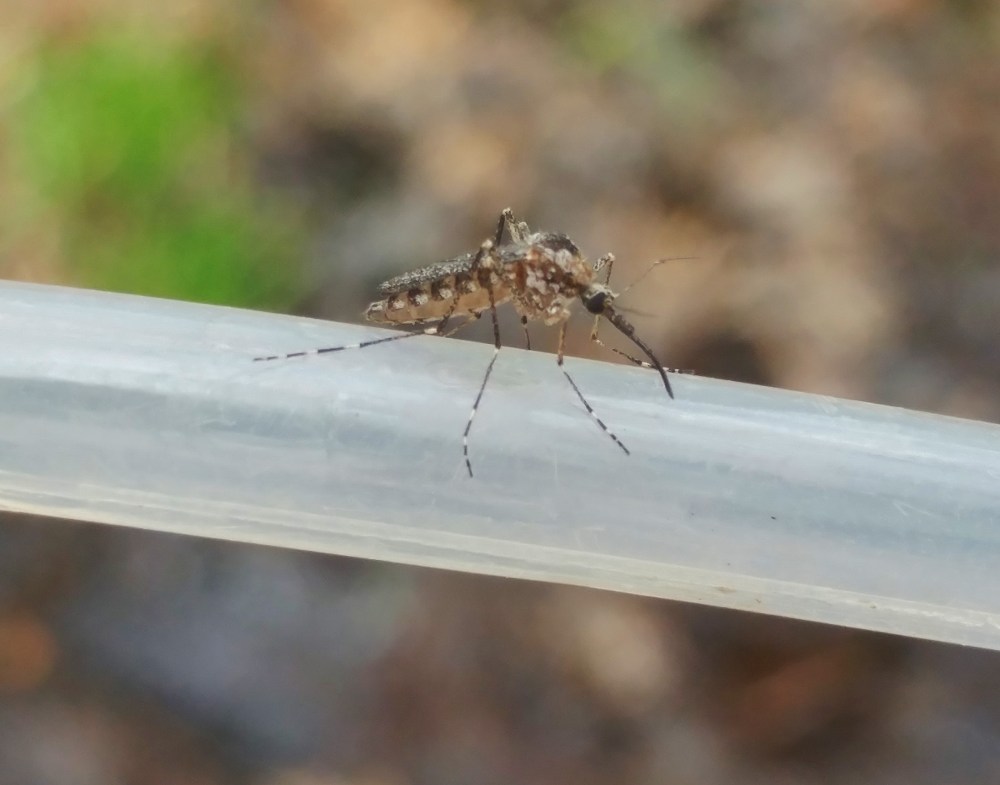
- Ae. canadensis adult resting on a sampling pipette after emerging in the collecting jar. Photo Credit: Dr. Diana Carle
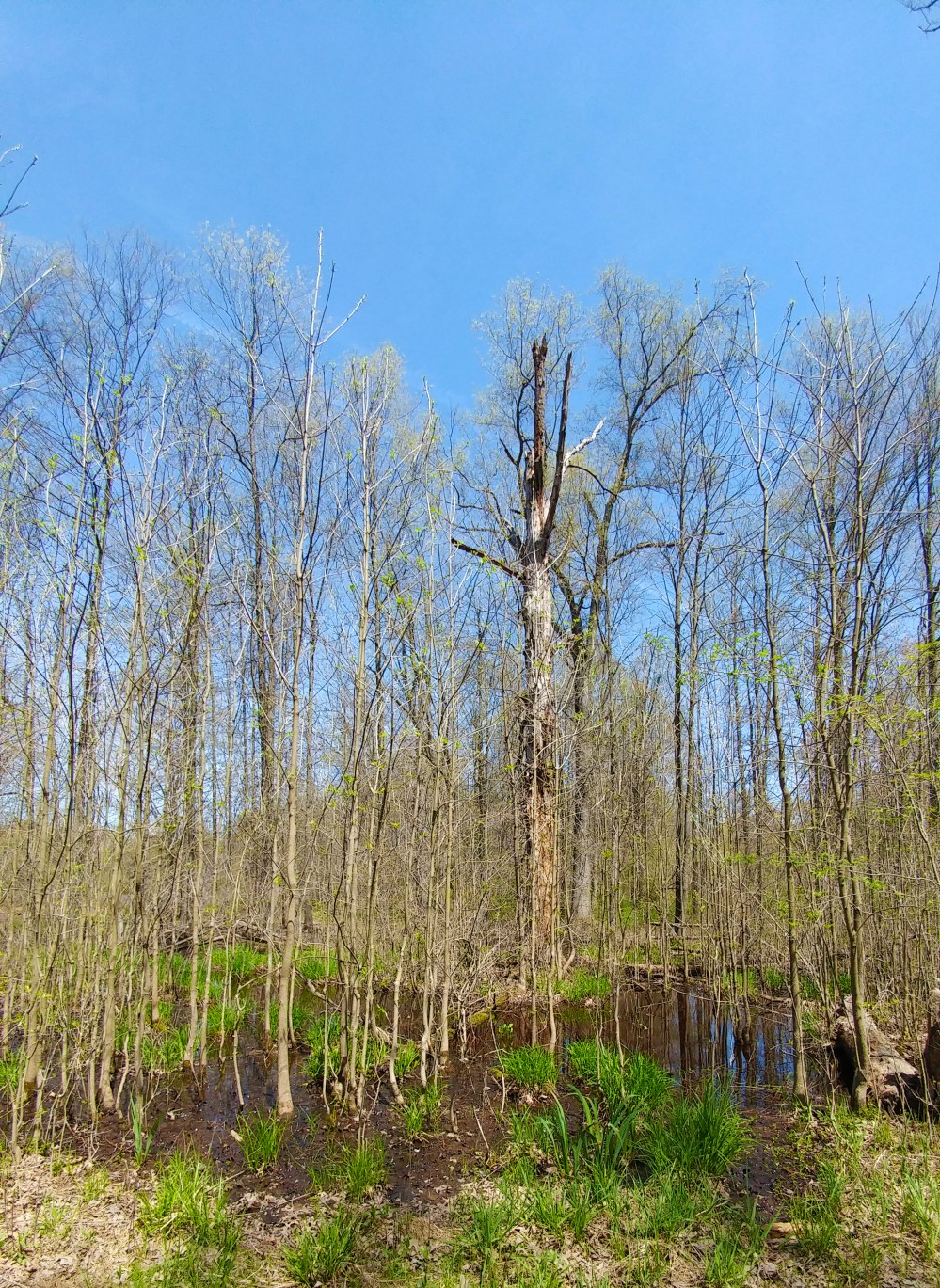
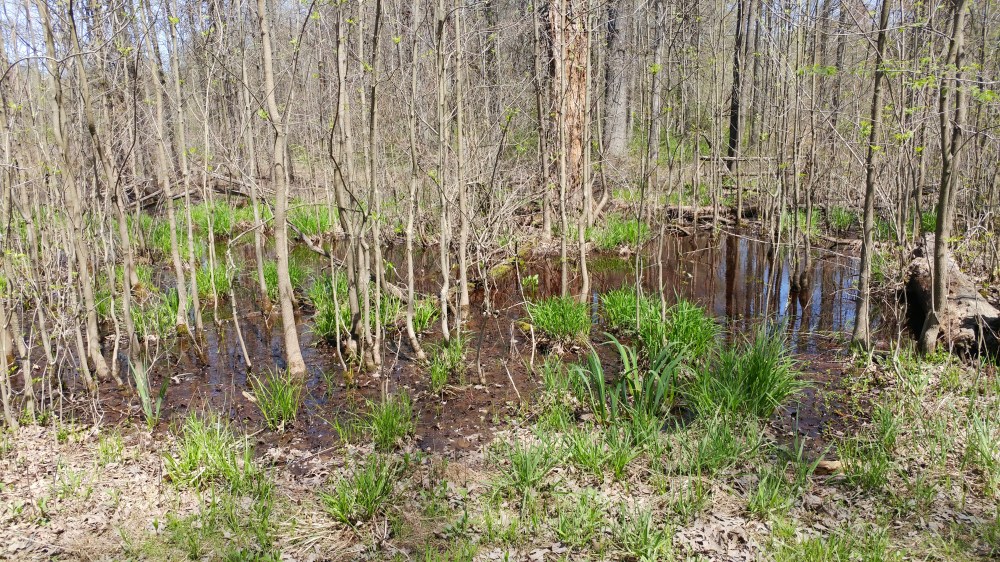
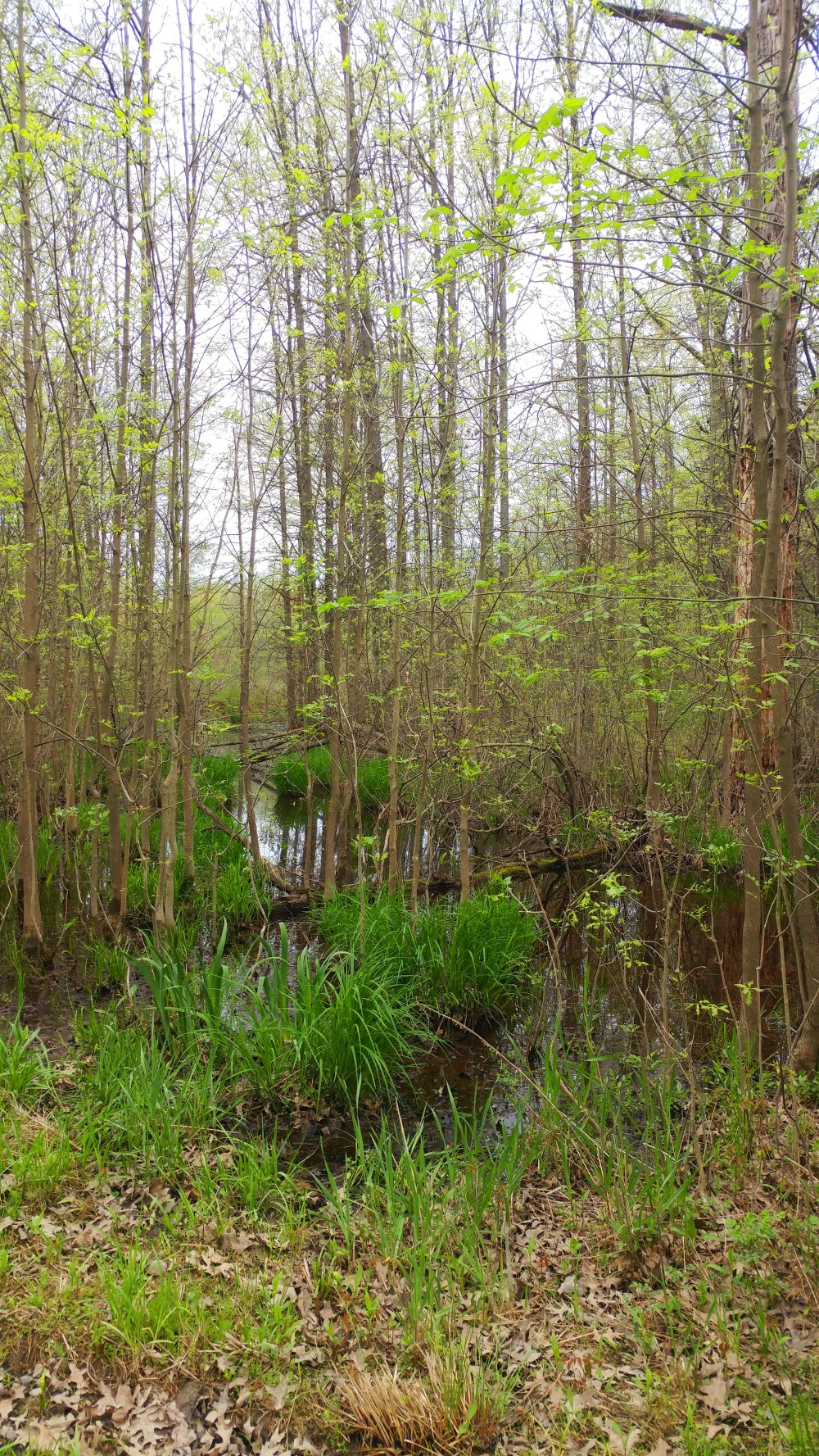
- Photo Credit: Dr. Diana Carle
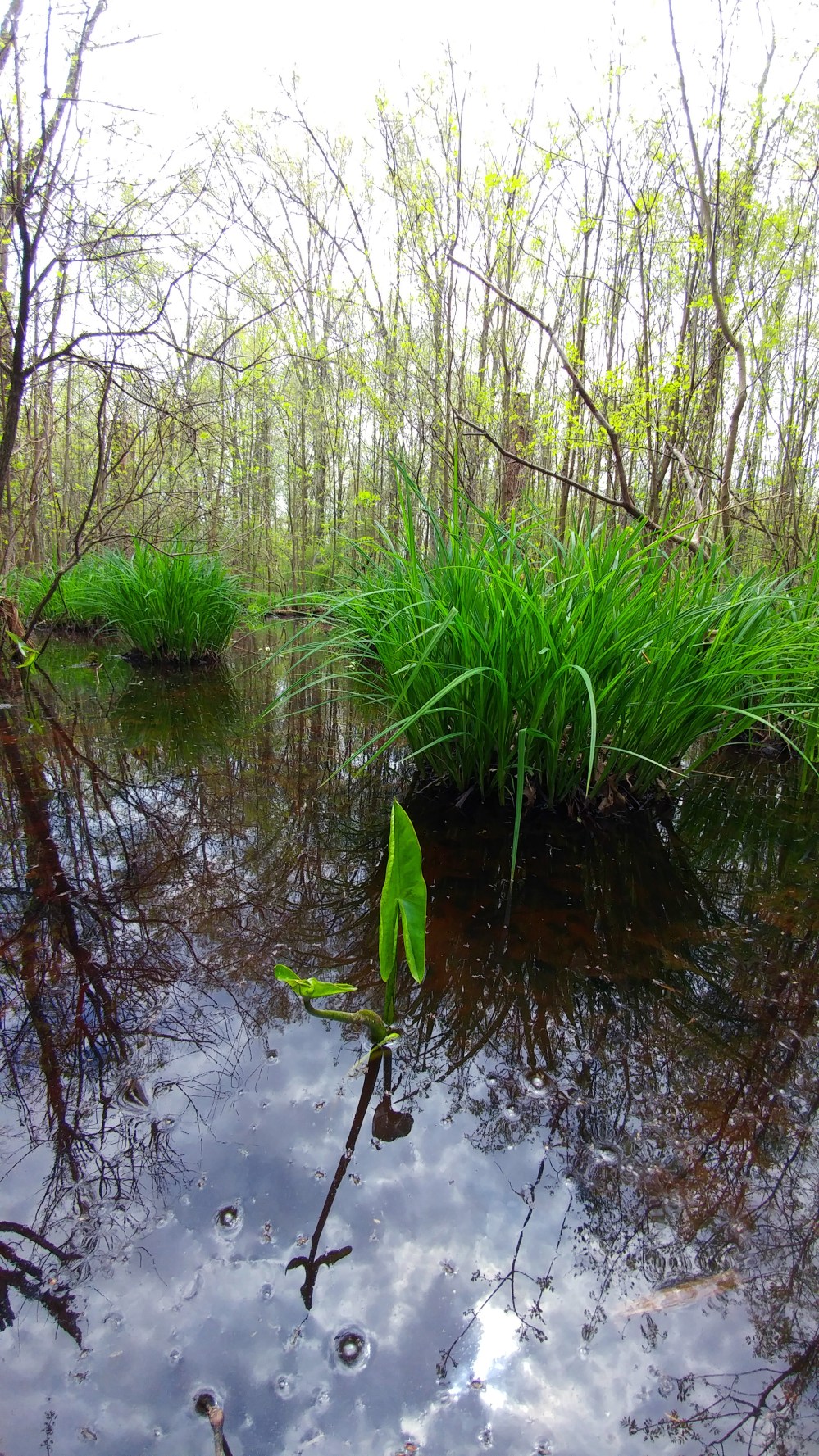
- Photo Credit: Dr. Diana Carle

The Great Swamp in Late Spring
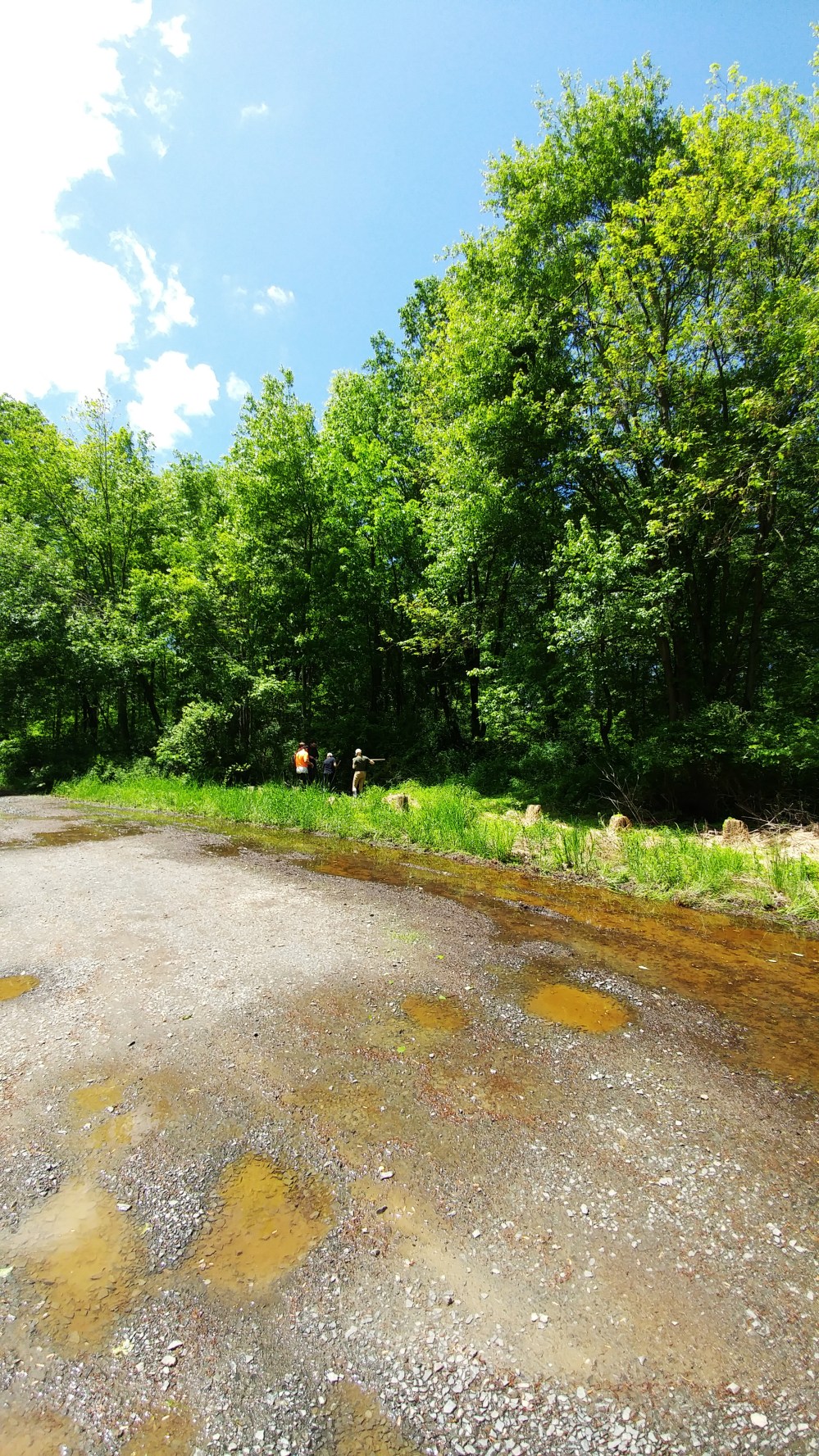
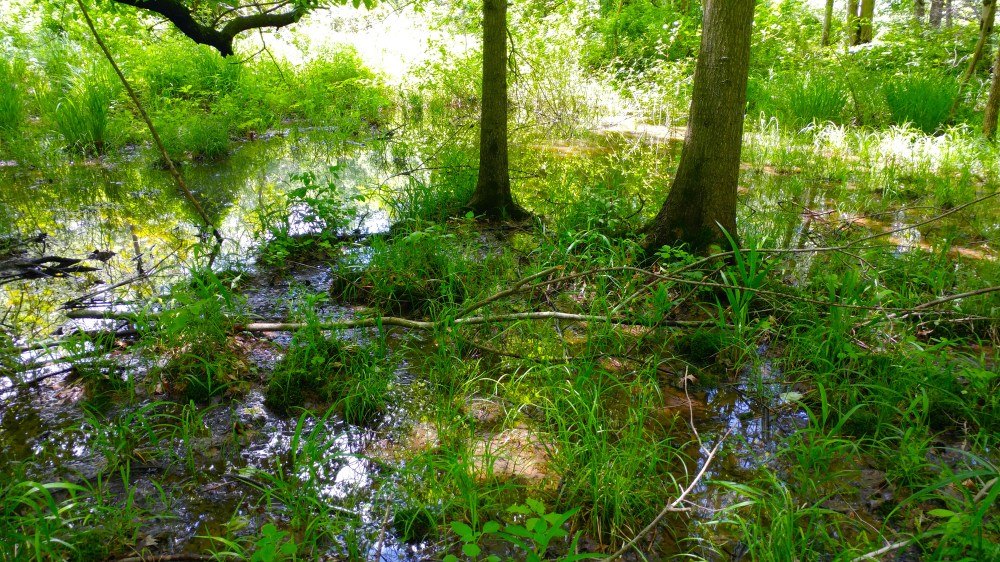
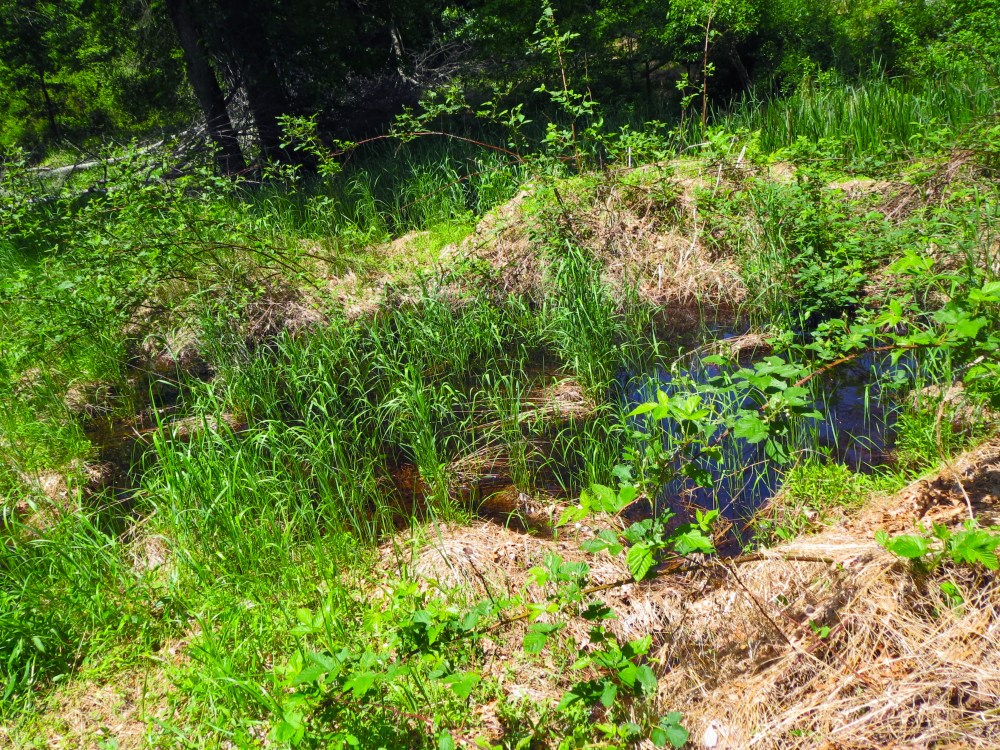
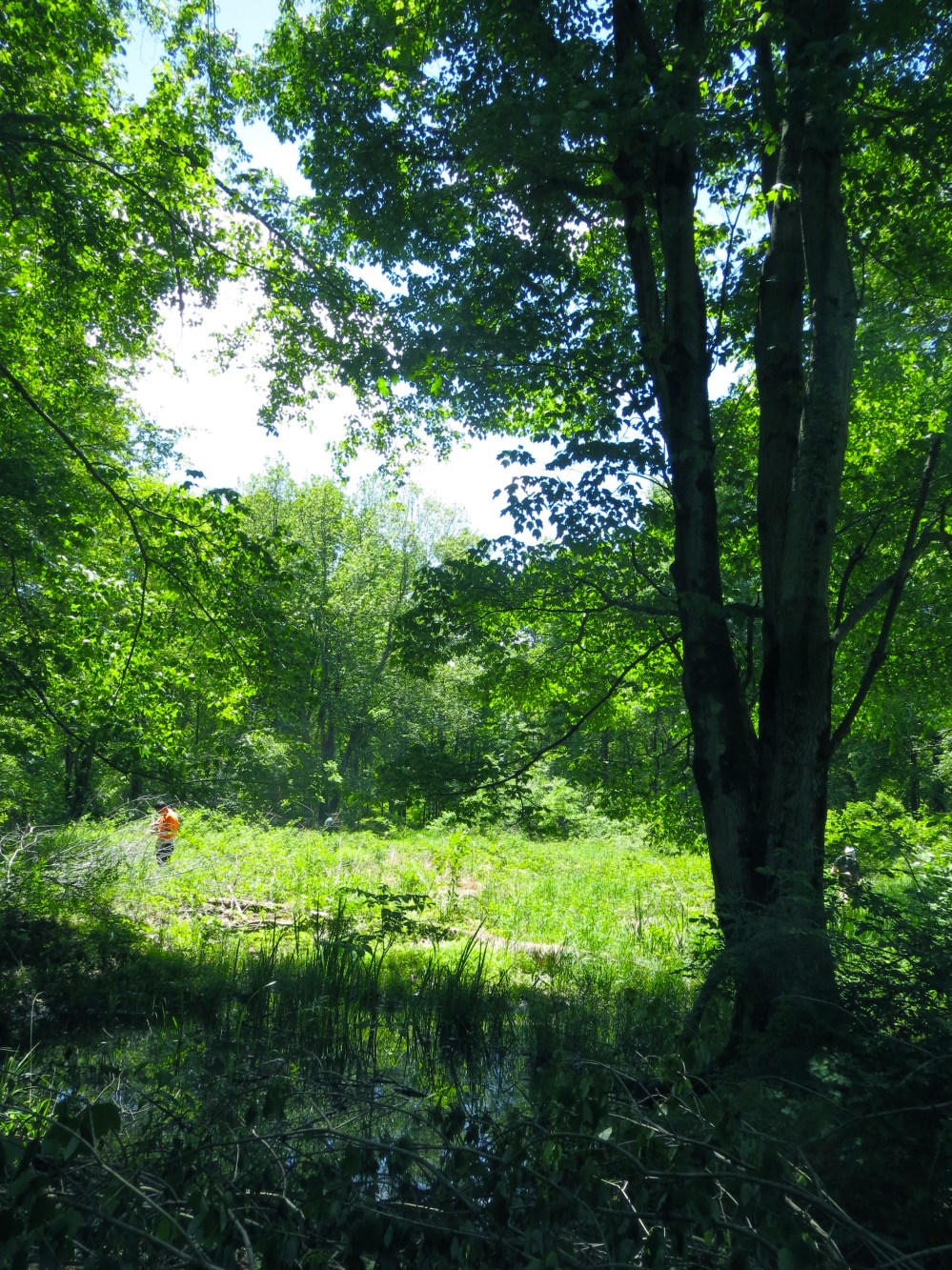
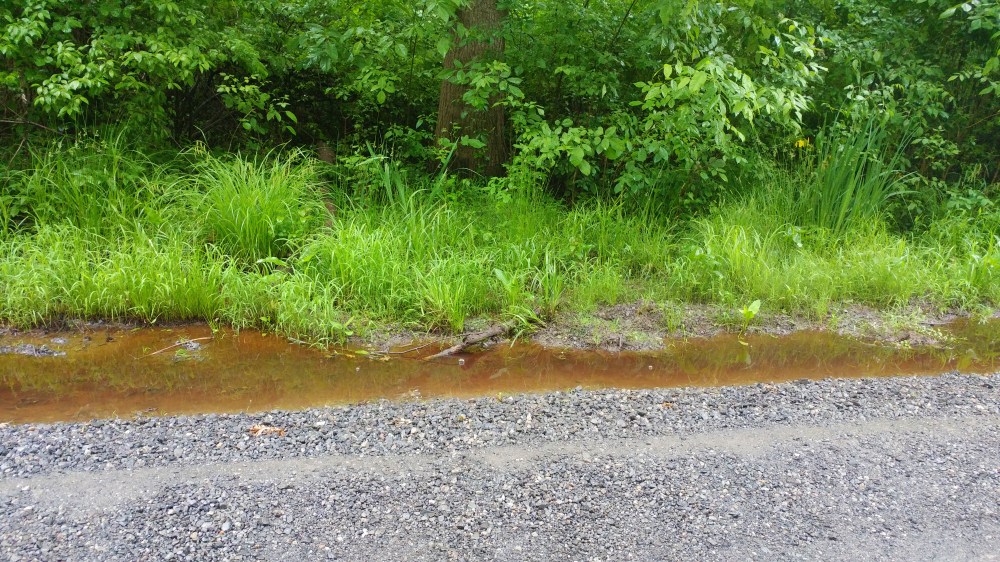
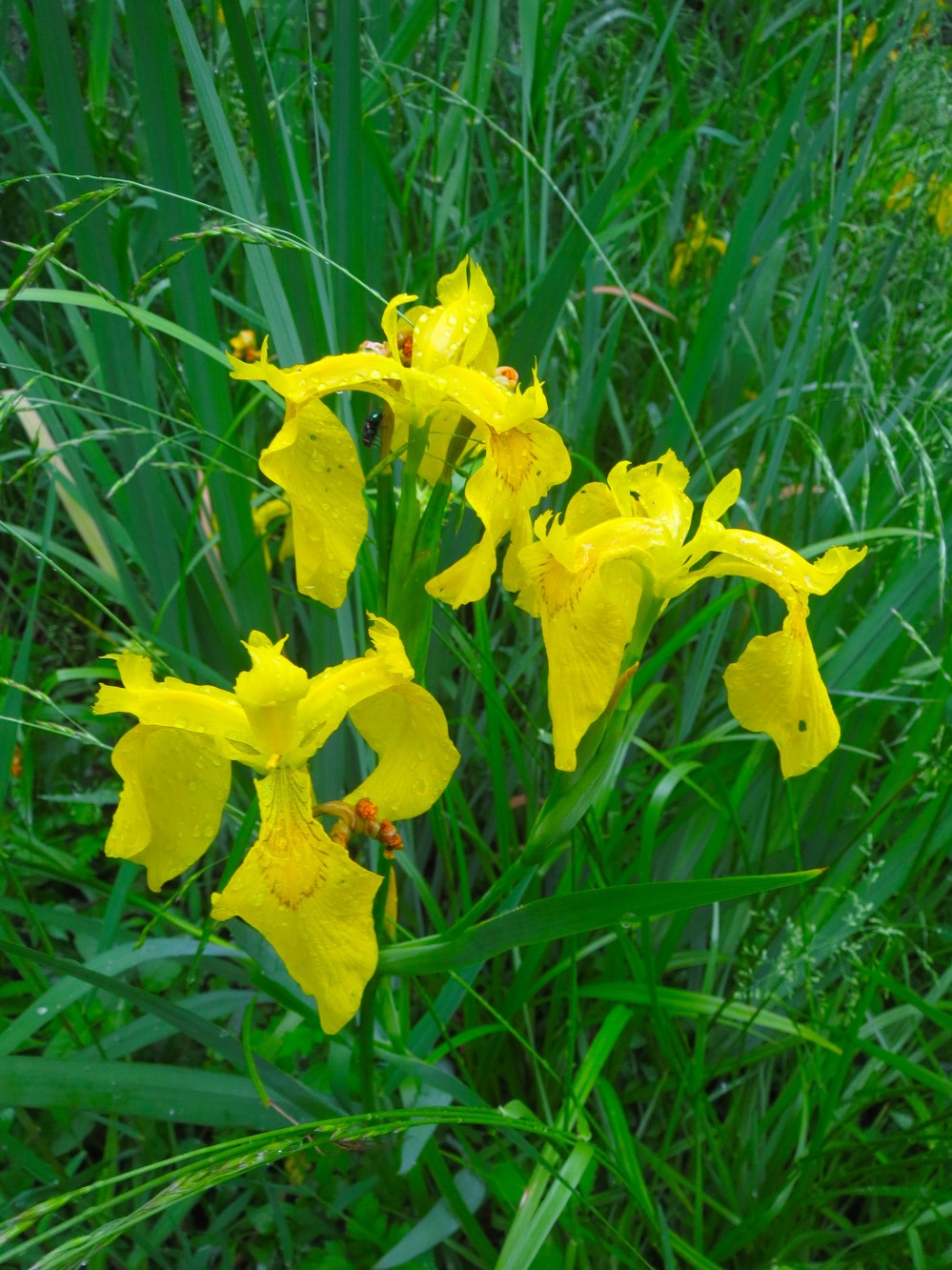
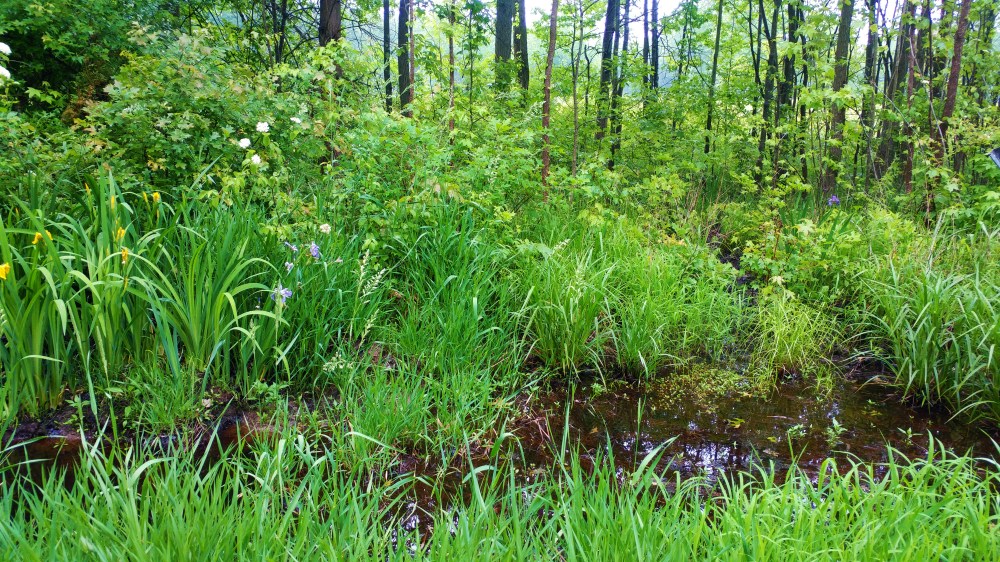
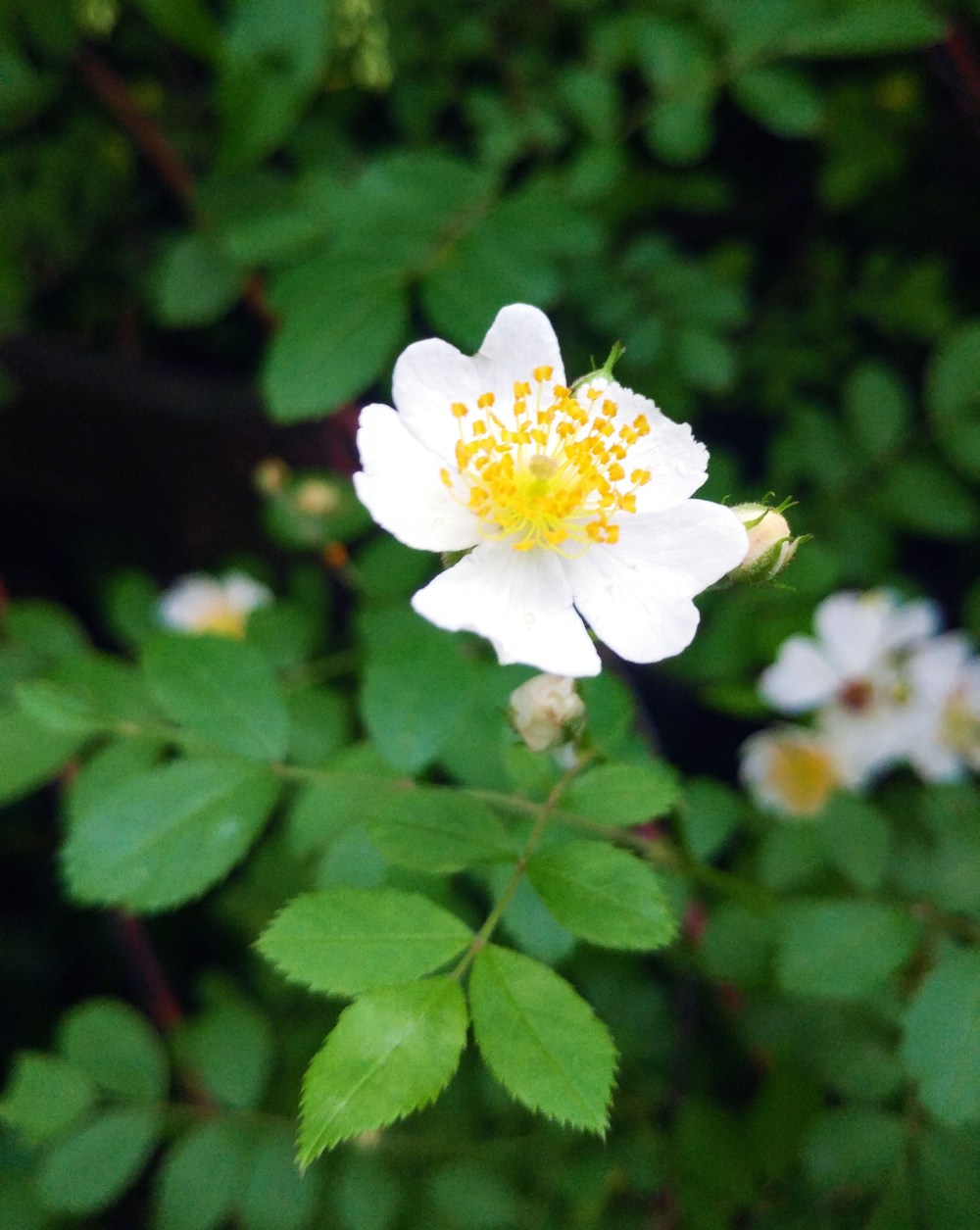
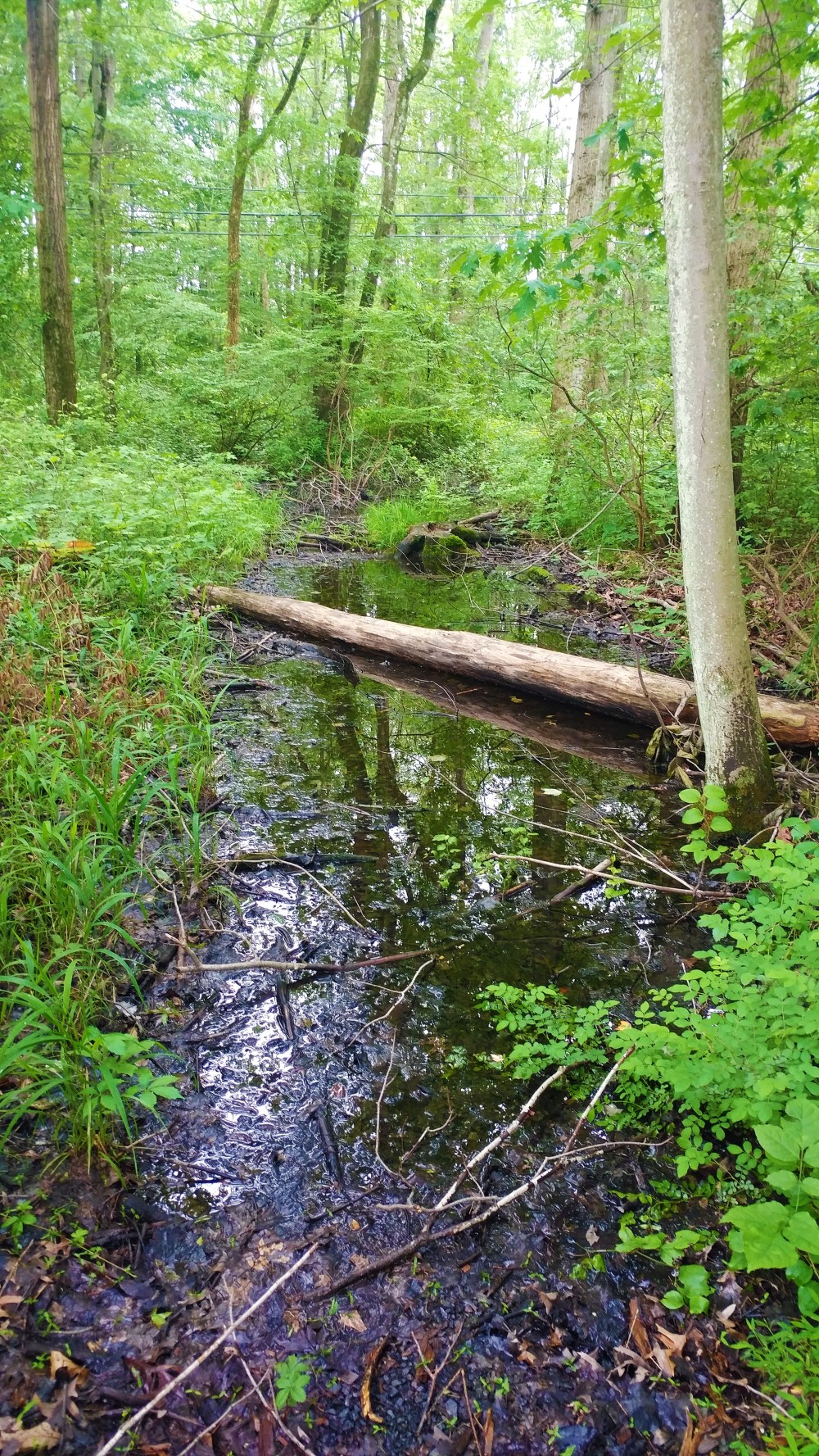
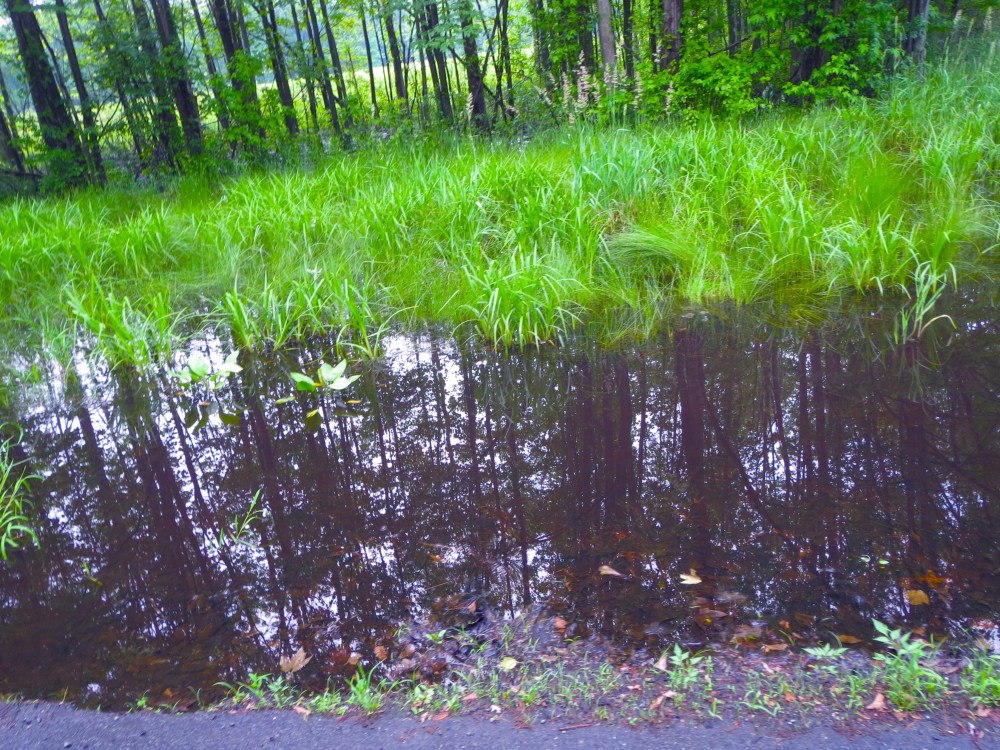
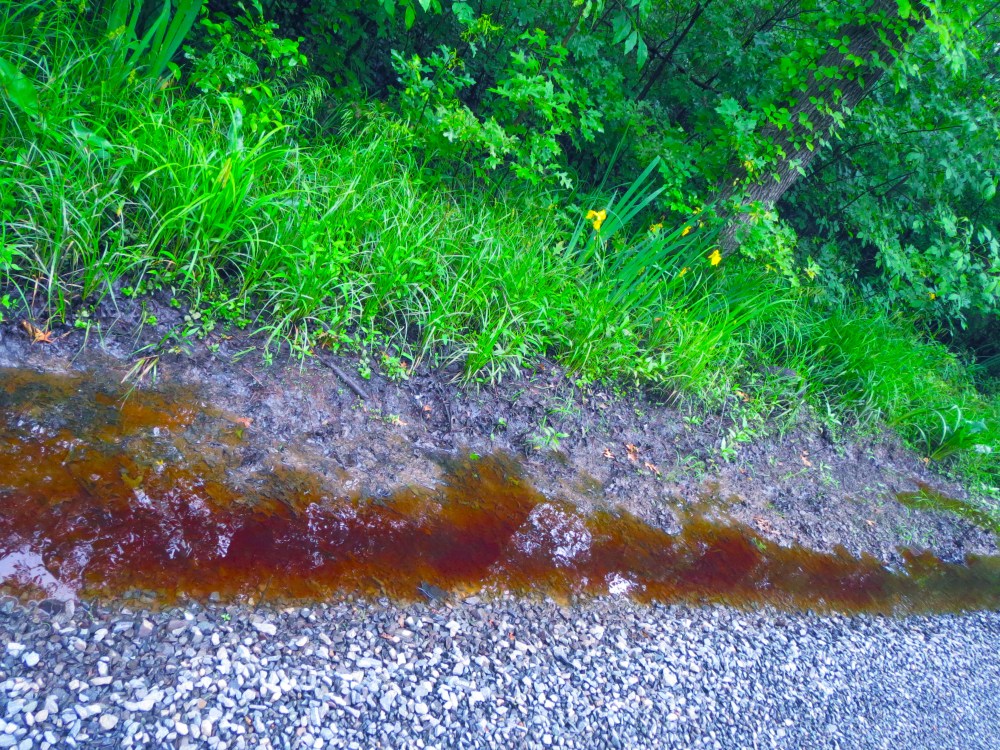
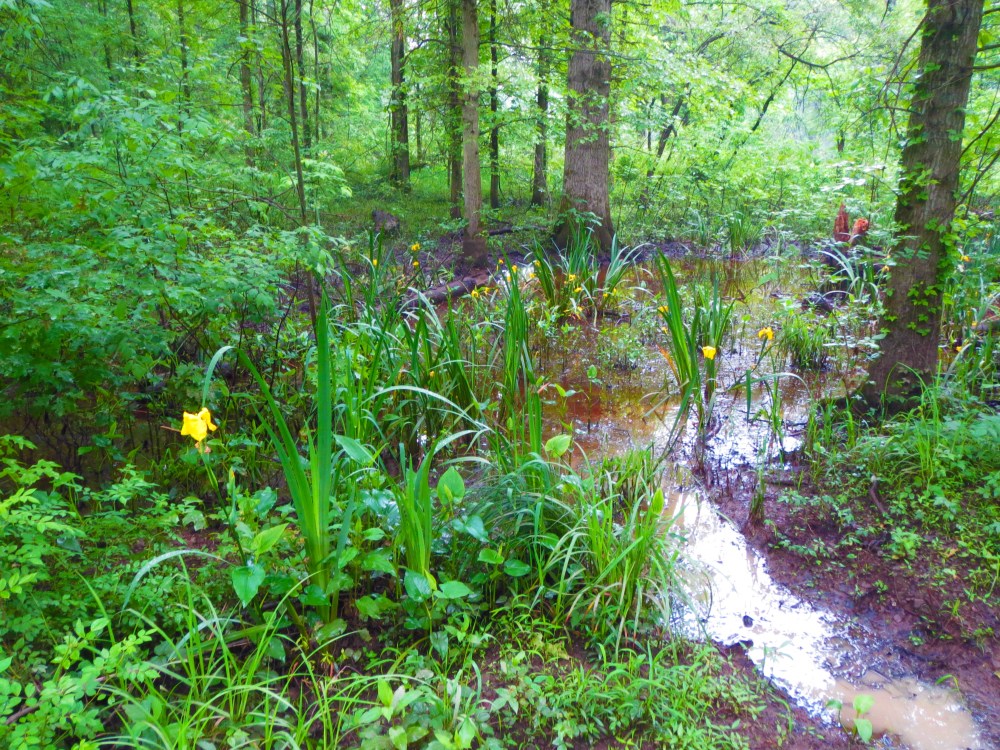
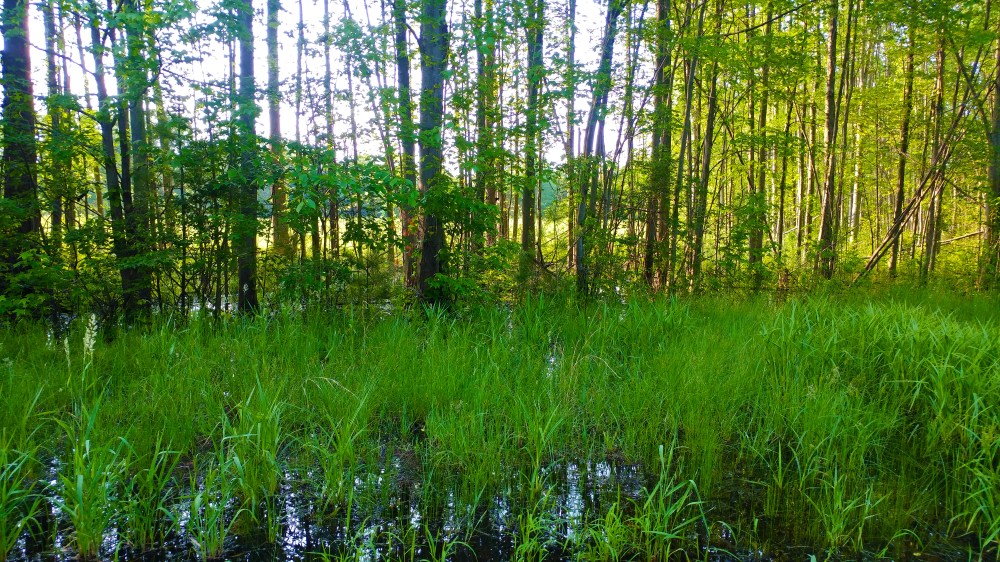
The Great Swamp in late spring is lush with bright green vegetation. Access and visibility also become more difficult at this time with the expanding vegetation, which makes inspecting a site like this in early spring a wise decision. The swamp also begins blooming with a variety of colorful flowers like yellow and purple wild irises, yellow wild buttercup, and the air is filled with the sweet scent of white multifloral rose. At this time of year the swamp can be almost unbearable as the Ae. vexans begin hatching in massive numbers.






The Great Swamp in Summer
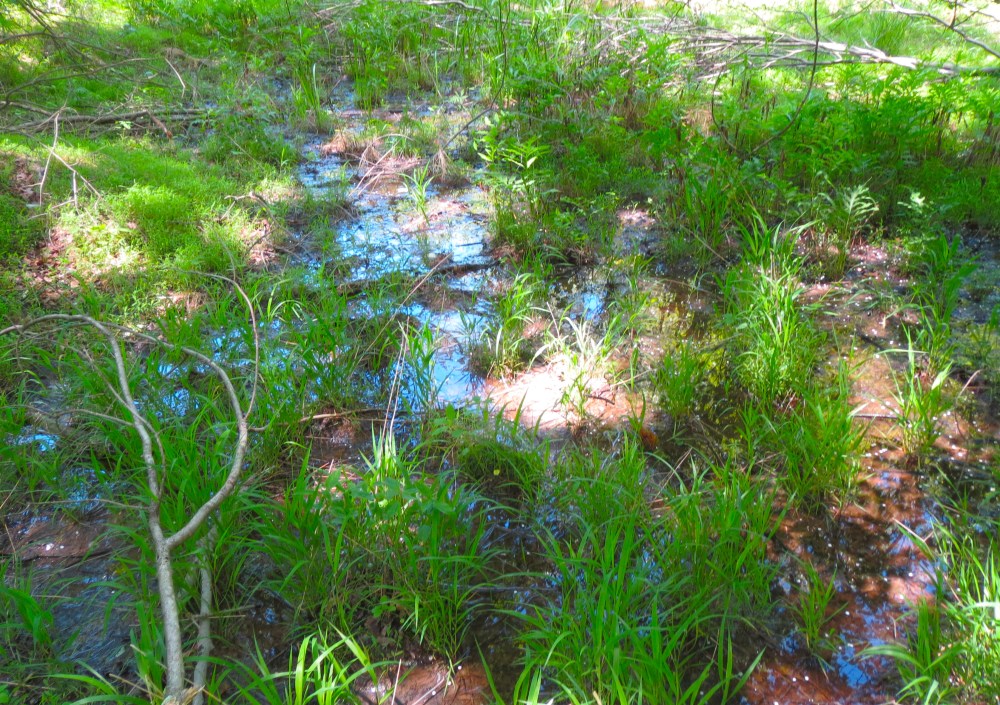
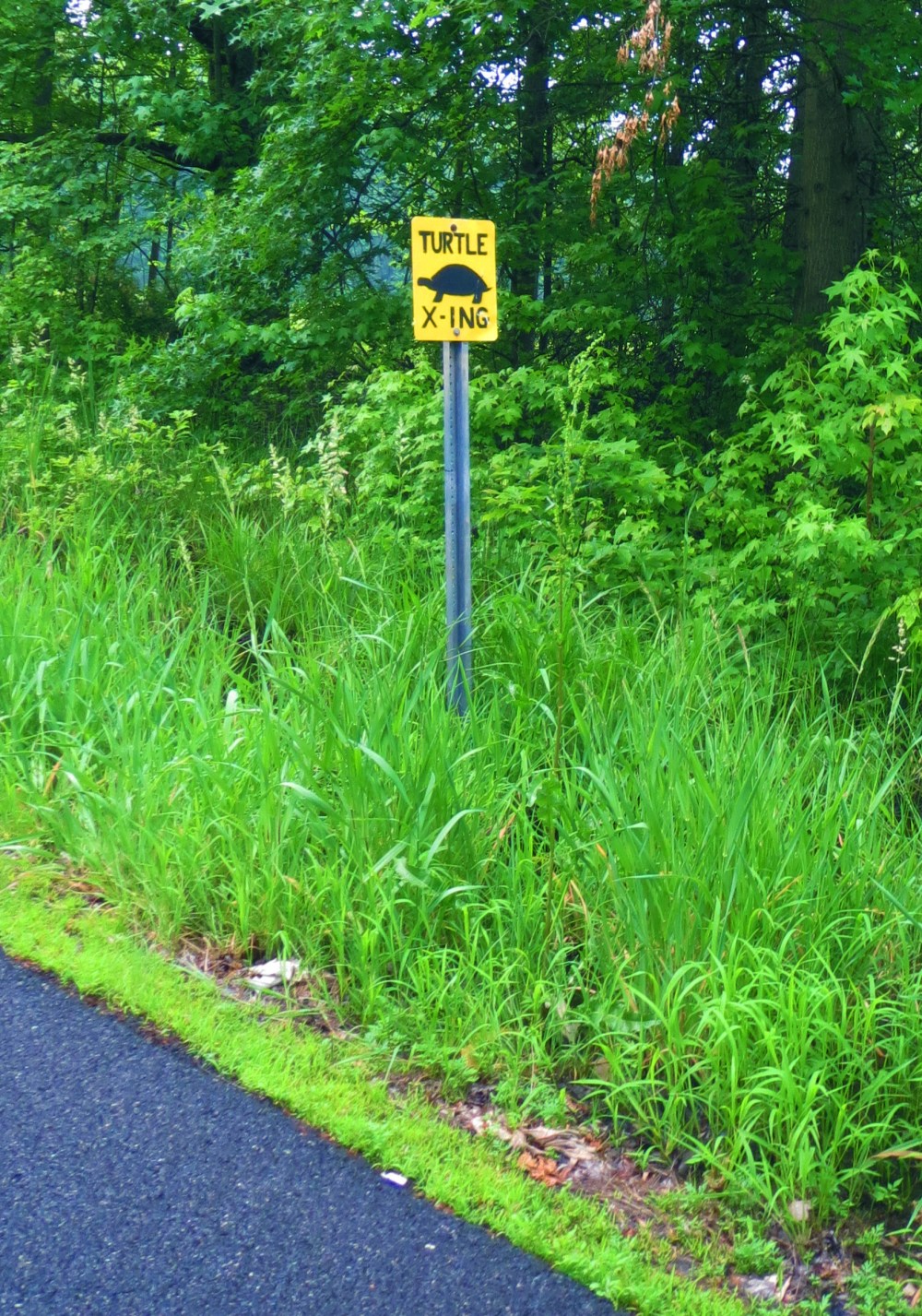
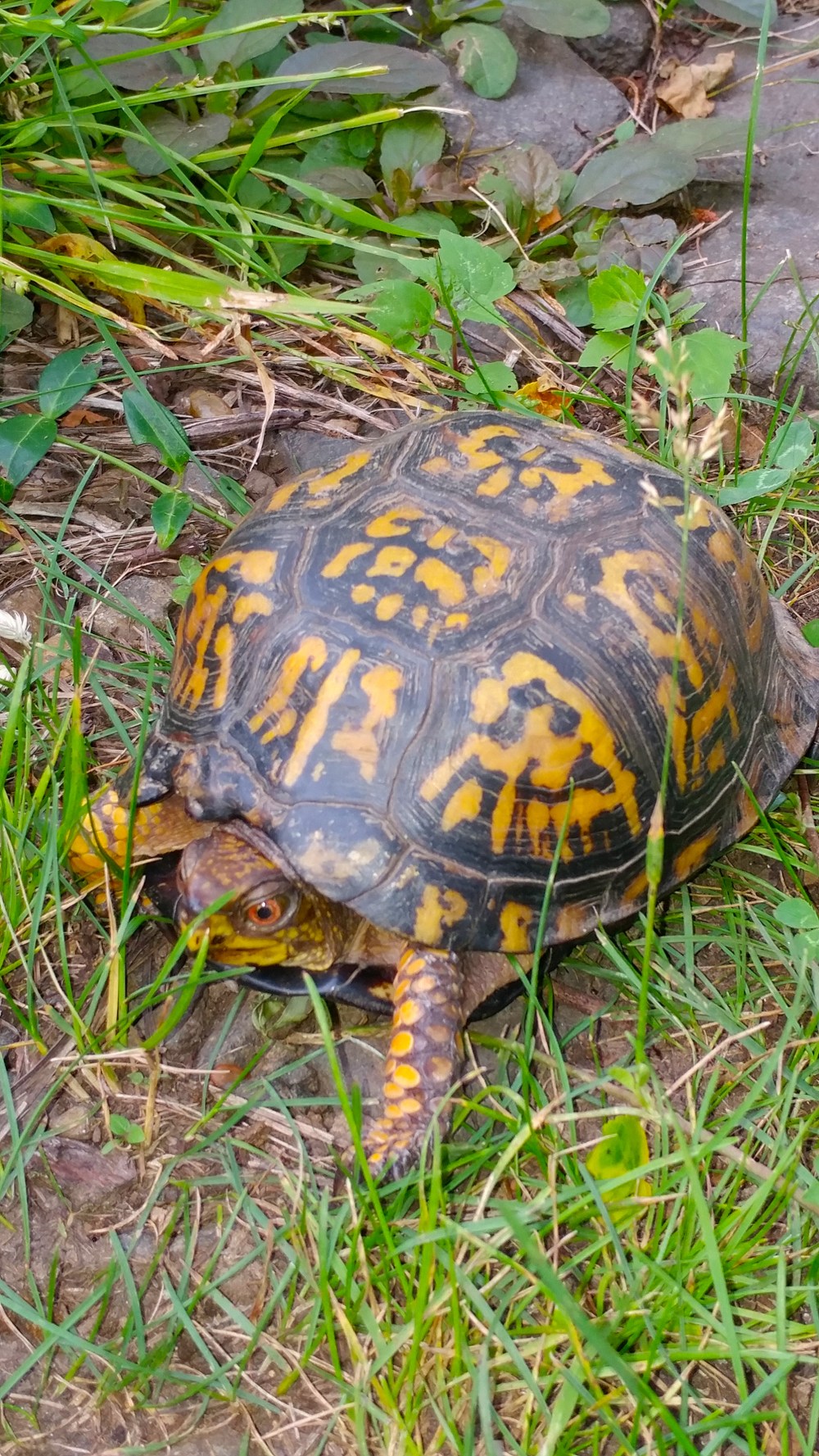
The multivoltine Ae. vexans continues to “vex” the swamp in ever increasing numbers at this time and single dip in a temporary pool can yield almost 100 larvae! As daytime temperatures rise to around 70-80 degrees F in the late spring and early summer, turtles emerge from hibernation and can be seen throughout the Great Swamp and, “Turtle X-ing” signs remind visitors of the swamp’s slowing moving residents. Wildflowers like swamp milkweed, goldenrod, and Joe pye weed are in full bloom in the summer and feed the swamp’s diverse pollinator populations. The Great Swamp is home to one of the state’s largest populations of Ur. sapphirina, the sapphire blue accented mosquitoes that feed not on humans but instead on the annelids crawling through the swamp’s rich dirt. While the adults of Ur. sapphirina begin emerging from their hibernation in spring, the summer is when you can start to collect their larvae, which are equally as unique looking as the adult, with the 2 pairs of head hairs found in most mosquitoes, evolving into 4 darkened long spines in this species. Duckweed is usually a good indicator of where to look for this species, and you will find it sympatric with the more common An. quadramaculatus, Cx. restuans, and Cx. territans in The Great Swamp.
 Diana Carle, PhD