Long before plastics, tin, glass and other artificial containers, nature was creating a variety of natural containers for mosquitoes from tree holes, rock pools, and more. These were the habitats utilized by container breeding mosquitoes for centuries before the advent of artificial materials that unlike these natural containers are more abundant and do not naturally decay.
Tree Holes
Perhaps the most well known natural container habitat is the tree hole. Created from dead branches that die and decay back to the tree trunk making a hole that can fill with water and organic matter running down the tree bark. This creates a semi-insulated habitat that resists evaporation and provides abundant organic matter for container breeding mosquito larvae to eat. The most well known resident of these habitats in NJ is the commonly known Eastern Tree Hole Mosquito, Aedes triseriatus. However Anopheles barberi, Orthopodomyia signifera, Orthopodomyia alba, and Toxorhynchites rutilus can also be be found in small numbers with Ae. triseriatus in these habitats.
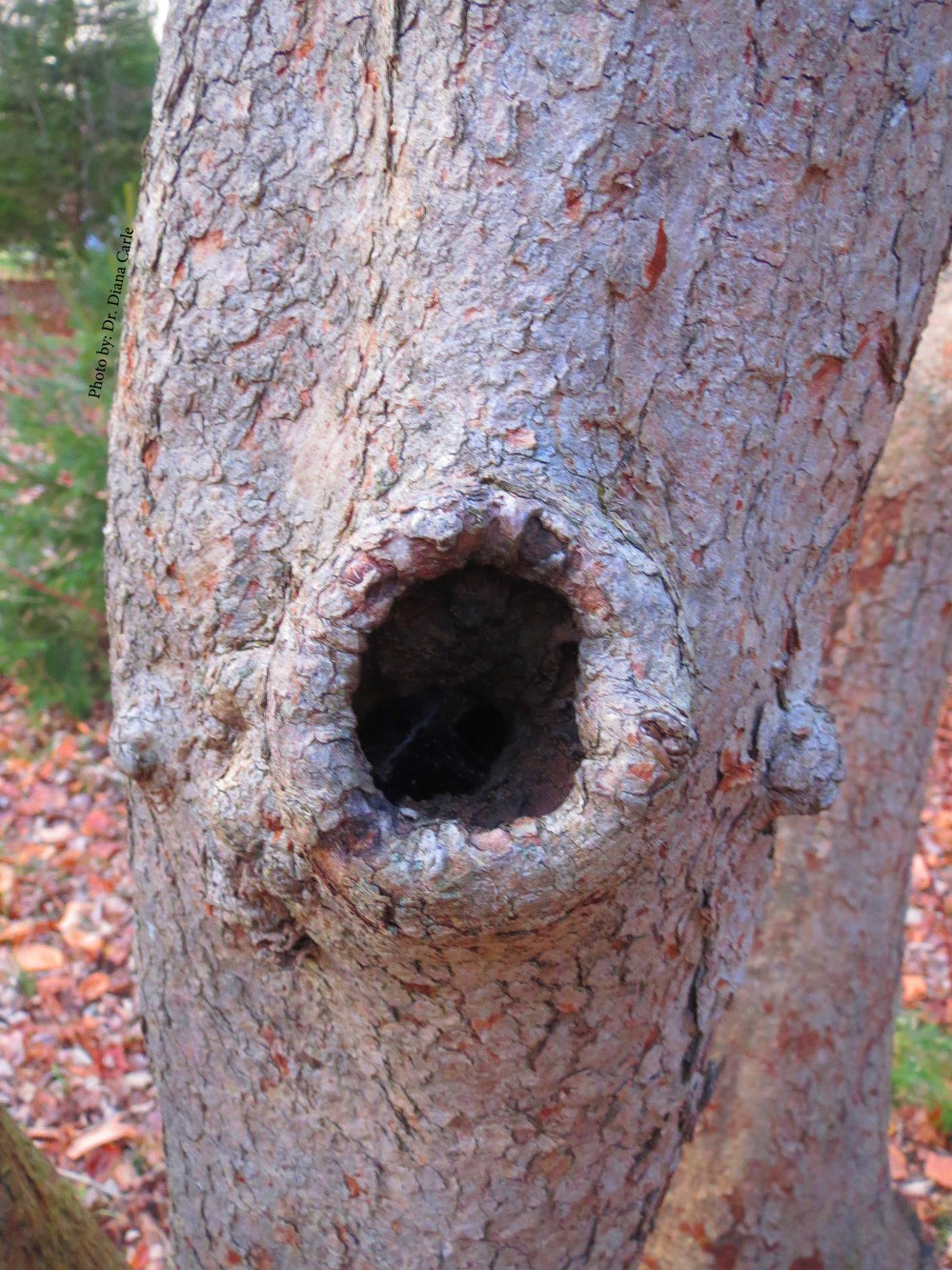
- Photo credit: Dr. Diana Carle – Tree hole habitat that can support both Tx. rutilus and Ae. albopictus
Bromeliads
This tropical plant is becoming more prevalent in NJ as residents use it their landscaping. However, in the tropics bromeliads are famous for the rich aquatic biodiversity that live inside the small pockets of water accumulated at the base of their leaves. In their native range, these plants support a diversity of natural predators such as tree frogs, snails, flatworms, small crabs, salamanders, and damselfly nymphs. Bromeliads in NJ usually hold water for a short period of time and do not support a predator population, this makes them are particularly good habitat for Aedes albopictus, which needs only 1/4″ of water and can develop from egg to adult in less than a week in the middle of the summer.


Bamboo
Bamboo is another non-native plant that can create a unique natural container habitat owing to its morphology. Though people often call bamboo a “tree”, it is actually a member of the true grass family. Most of the bamboo plant is hollow except for the nodes which seal of plant into sections, like close cans stacked on top of each other. When the bamboo dies (which usually happens about every 10 years) or when they culled, if not cut flush to the ground, they create a sort of natural cup sticking out of the ground. These “natural cups” are not only a tripping hazard, but a perfect habitat for container breeding mosquitoes. The most abundant species usually found within this habitat is Ae. triseriatus.


 Diana Carle, PhD