A pollinator garden is not only a great conservation project, it also provides your child with the invaluable experience of expanding their mind through observing the infinite diversity present in nature. The first step is to choose flowers and plants that foster your child’s sensory development through a variety of colors, shapes, smells, tastes, and textures, which are also foundational skills for studying Science, Technology, Engineering, and Math (STEM). This can become an educational Eden where your child can observe, experiment with, and hypothesize about how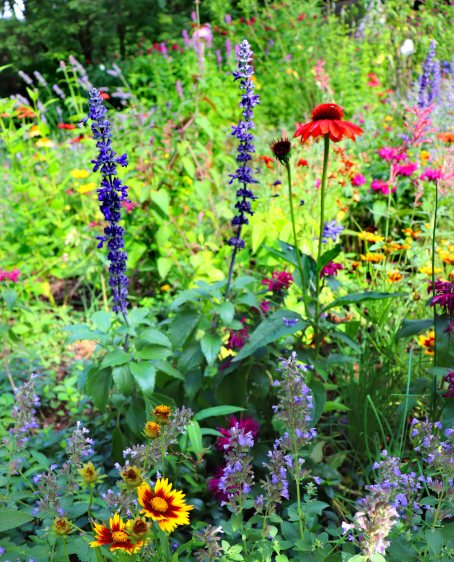 water and sunlight make flowers grow, the relationship between flower shape and pollinator preference, how insects use structures on their bodies to pollinate flowers, the dynamics of animal camouflage, the mechanisms of flight in birds and insects, and so much. While you should always consider your child’s specific allergies and sensitivities, the following are a sampling of great plant choices for starting a pollinator garden to ignite curiosity and encourage active Bee balm is a beautiful flower native to North America, perennial in USDA hardiness zones 3-9, and is excellent at attracting pollinators to any garden. Zinnias and dahlias come in lovely shades of the rainbow for your child to observe like red, burgundy, pink, yellow, orange, as well as multicolored forms. Herbs like lavender, basil, and sage are colorful pollinator favorites with beautiful smells for your child to experience and can also be used to season your favorite Adding fruit and vegetable plants like strawberry, watermelon, blueberry, cantaloupe, cucumber, pumpkin, zucchini, celery, carrot, or even fruit trees gives your child the opportunity to observe how a flower pollinated by an insect can transform into delicious food to eat. You can also teach your child responsibility in an engaging and fun environment as they grow and assume some of the gardening tasks themselves. It is also important NOT to plant invasive species of flowers that can aggressively take over your garden, or harm the local habitat. Try planting native species that can live in balance with the local ecosystem.


 Diana Carle, PhD